Lotus Cars: The Enduring Pursuit of Automotive Purity and Lightness
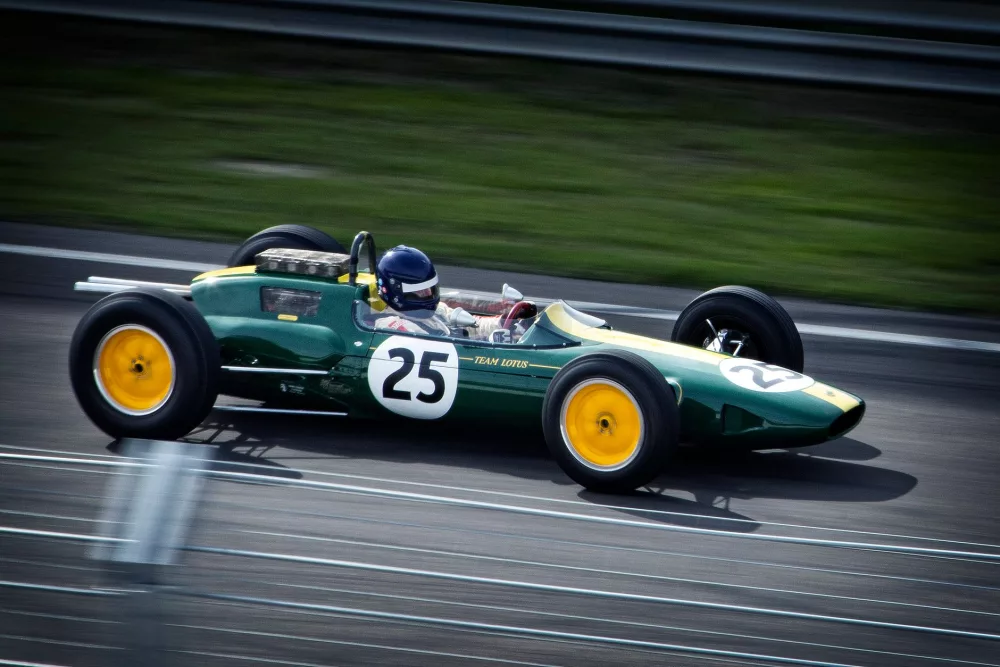
You know, whenever I think about genuine driving machines, Lotus cars immediately spring to mind. It’s not just a brand; for me, it’s a whole philosophy wrapped in fiberglass and aluminum, or more recently, advanced composites. I mean, they’ve always done things their own way, right? It’s all about performance through lightweight design, an approach that frankly, I find absolutely brilliant and incredibly effective. If you’ve ever had the chance to drive one, even just for a few minutes, you’ll understand what I’m talking about. There’s a certain tactile feedback, an immediacy to the steering, that just gets under your skin. It feels different, special.
The Visionary: Colin Chapman and “Simplify, then Add Lightness”
So, where did this unique automotive journey begin? Well, it all goes back to one incredibly influential and visionary engineer: Anthony Colin Bruce Chapman. He wasn't just building cars; he was practically reinventing how they should be conceived and constructed. From his early days building trials cars in a lock-up garage in North London in the late 1940s, Chapman had a clear idea. He quickly realised that simply adding more power wasn't always the best route to speed. Instead, he championed the idea of reducing weight and refining handling. This led to his now-iconic mantra: “Simplify, then add lightness.”
This philosophy became the absolute core of what Lotus is all about. It’s a genius concept, isn't it? By making a car lighter, you need less powerful brakes, smaller engines can achieve better performance, and the car's agility becomes unmatched. It creates a virtuous cycle of efficiency and dynamic prowess. I truly believe this single idea has shaped not just Lotus, but influenced countless other sports car manufacturers over the decades.
Early Innovations and Motorsport Dominance
My goodness, the cars they produced in those early days were truly revolutionary! From the original Lotus Mark series, which were essentially modified Austin Sevens, to the groundbreaking Lotus Seven – a car so pure in its driving intent that, by the way, you can still get modern iterations from Caterham today. That’s how enduring and influential the design proved to be. Chapman and his team were constantly experimenting, pushing boundaries in chassis design, aerodynamics, and suspension geometry.
But you just can’t talk about Lotus without talking about racing. I mean, they were an absolute force to be reckoned with in Formula 1 for years! Under Chapman’s leadership, Team Lotus achieved incredible success, winning seven Formula 1 Constructors' titles and six Drivers' titles between 1963 and 1978. Legends like Jim Clark, Graham Hill, Jochen Rindt, Emerson Fittipaldi, Mario Andretti, and even a young Ayrton Senna, all drove Lotus cars to victory. Their engineering innovations on the track, such as ground effect aerodynamics and monocoque chassis, often trickled down into their road cars, which is just awesome for enthusiasts like us.
Road Car Icons: From Elan to Esprit
Back on the road, Lotus continued to make waves. One of their early standout models was the Lotus Elan, launched in 1962. It was a truly beautiful little roadster, lightweight, agile, and incredibly fun to drive. I just love its elegant lines; it really showed the world what Lotus could do: blend exhilarating performance with fantastic handling and undeniably good looks. It became a benchmark for small, nimble sports cars.
Then came the Lotus Europa in the late 1960s, one of the first mid-engined production cars in the world. It was quite striking visually, perhaps a bit polarizing, but it offered incredible balance and handling thanks to its engine placement. And who could possibly forget the Lotus Esprit? That car was pure 70s and 80s cool, an absolute poster car for a generation. It was a movie star, literally, with James Bond driving it, even underwater! Talk about iconic! I always admired its sharp, futuristic wedge shape, initially designed by Giorgetto Giugiaro. They managed to keep it fresh and relevant for decades, evolving through various iterations, which says a lot about its fundamental design strength.
The Return to Purity: Elise and Exige
After some financial ups and downs and various changes in ownership, Lotus really hit its stride again with the introduction of the Lotus Elise in 1996. I remember seeing one for the first time and thinking, “Wow, this is truly different.” It was a complete and utter return to Colin Chapman’s core principles: stripped-back, incredibly light (thanks to its innovative bonded extruded aluminium chassis), and offering absolutely pure, unadulterated driving pleasure. It was minimalistic, but every component served a purpose. The Lotus Exige took that concept even further, essentially a more track-focused, even more aggressive version of the Elise, almost like a road-legal race car. For me, these cars truly defined the modern Lotus and brought the brand back into the spotlight for enthusiasts.
Evolving for the Future: Emira and Eletre
Of course, it hasn't always been smooth sailing. Lotus has seen quite a few changes in ownership over the years, and there were times when we all wondered what would happen next for this beloved but niche brand. It’s tough being a relatively small, specialist automaker, especially when you’re trying to compete with global automotive giants.
However, under the ownership of Geely, we're seeing a truly exciting new chapter unfold for Lotus. They're making bold moves and pushing the boundaries once again. The Lotus Emira is their fantastic send-off to internal combustion engines. It’s an absolutely stunning, beautifully engineered sports car that still embodies the brand’s dynamic prowess, but with a level of refinement and usability that previous models sometimes lacked. It feels like a brilliant culmination of everything they’ve learned about making petrol-powered sports cars.
And then there’s the Lotus Eletre, their first all-electric SUV. An SUV from Lotus? I know, it sounds wild, almost contradictory to everything the brand stood for in its early days, but it shows they're not afraid to evolve. It’s a hyper-SUV, designed to maintain that core Lotus DNA of performance and agility, even in a larger, electric package. It’s definitely a bold and surprising move, and I’m incredibly curious to see how it plays out in the market and how it helps shape the perception of Lotus going forward.
The Enduring Appeal of Lightweight Engineering
For me, Lotus cars have always represented something genuinely special. They’re not about brute force, or showing off with excessive horsepower numbers; they’re about the intimate connection between the driver and the machine, the feel of the road through the steering wheel, and the sheer, unadulterated joy of driving. It’s that engineering purity, that relentless pursuit of lightness, that really makes them stand out in a world often obsessed with weight and excess. That commitment to dynamic excellence, I truly believe, will continue to be the guiding star for the brand, even as they embrace an electric and more luxurious future. It’s going to be incredibly exciting to watch what they do next, and I for one can’t wait to see how they continue to innovate while staying true to their unique heritage.